
Material Composition and Performance Characteristics
Weight, Handling, and Installation Practicalities
Durability, Maintenance, and Lifecycle Cost
Design Flexibility and Application Suitability
Material Composition and Performance Characteristics
HPL cladding is produced by impregnating multiple layers of kraft paper with phenolic resins and then bonding a decorative surface layer under high heat and pressure. This process yields a dense, non‑porous panel that resists moisture ingress and does not support mold growth. Cement board siding, by contrast, consists of a cementitious matrix reinforced with cellulose fibers, resulting in a rigid board that is porous unless sealed.
HPLMAKER’s HPL products exhibit inherent moisture and water resistance, meaning they do not swell, warp, or delaminate when exposed to rain or humidity. The decorative surface is engineered for UV resistance, so colors remain stable without fading or discoloration even after prolonged sun exposure. Fire‑retardant additives are incorporated during manufacture, giving the panels a rating that helps limit flame spread in interior and exterior applications.
Because the surface is non‑porous, HPL cladding is easy to clean with mild detergents and does not require sealing or painting. It also resists scratches, stains, and termite attack, which reduces the need for protective treatments over its service life. Cement board, while durable, typically needs a protective coating or paint to achieve comparable resistance to UV fading and moisture absorption, and its porous nature can harbor mold if not properly maintained.
HPLMAKER backs its panels with an up to 25‑year Live Camera Warranty, described as the only one of its kind in India, offering specifiers confidence in long‑term performance. The company’s HPL finds use in wall cladding, flooring, false ceilings, bathroom cubicles, and public spaces such as airports, hospitals, and schools, serving architects, builders, interior designers, contractors, and homeowners across the country.
Weight, Handling, and Installation Practicalities
HPL panels are notably lighter than cement board of comparable thickness, which simplifies transportation to the site and reduces the structural load on supporting framing. The reduced weight also means that handling crews can maneuver the boards with standard lifting equipment or even manually for smaller panels, lowering the risk of on‑site injury.
Cement board, owing to its cementitious core, is significantly heavier. This weight necessitates mechanical lifting aids for most installations and can increase the time required to position each board. The heavier mass also translates to higher dead‑load considerations for the wall system, which may affect the design of studs or backing structures.
Installation of HPL cladding generally involves mechanical fasteners such as screws or nails combined with construction‑grade adhesives, or a concealed clip system that allows for panel movement. The panels can be cut with standard wood‑working tools, and edges do not require sealing because the material itself is water‑resistant. Joints are often left exposed or covered with matching trim, simplifying the finishing process.
Cement board installation follows a more labor‑intensive sequence: boards are screwed to the substrate, joints are taped with fiberglass mesh, and a skim coat of joint compound is applied to create a smooth surface. This taping and mudding step adds time and requires skilled labor to avoid cracking or uneven finishes. Additionally, the board must be primed and painted or otherwise sealed to protect against moisture, adding further steps before the final cladding can be applied.
The following table highlights the key contrasts in weight and installation attributes between HPL cladding and cement board siding:
| Attribute | HPL Cladding | Cement Board Siding |
|---|---|---|
| Relative Weight | Lightweight | Heavier |
| Typical Installation Method | Fasteners with adhesive or concealed clips | Screws, joint taping, and mudding |
| Surface Preparation | Minimal; panels ready to fix | Requires priming and sealing after joint treatment |
| Joint Treatment | Exposed or trimmed; no sealing needed | Taping and compound application required |
Durability, Maintenance, and Lifecycle Cost
HPL cladding’s resistance to moisture, UV radiation, and biological growth translates into a long service life with minimal upkeep. Because the panels do not absorb water, there is little risk of swelling, warping, or freeze‑thaw damage in climates with seasonal temperature swings. The UV‑stable surface prevents color shift, maintaining the aesthetic intent of the design without the need for repainting.
Maintenance consists primarily of periodic cleaning with water and a mild detergent to remove surface dirt or pollutants. The scratch‑ and stain‑resistant finish means that routine wear does not mar the appearance, and the termite‑resistant nature eliminates concerns about insect damage in tropical or humid regions.
Cement board, while strong, is susceptible to moisture absorption if the protective coating is compromised. Over time, uncoated edges can develop efflorescence or staining, and the board may require repainting or resealing to preserve its appearance and performance. In freeze‑thaw environments, water that penetrates the board can expand upon freezing, potentially leading to cracking or spalling if not adequately protected.
The lifecycle cost of HPL cladding tends to be lower when factoring in reduced labor for installation, minimal ongoing maintenance, and the avoidance of frequent repainting or repair. Cement board may present a lower initial material cost, but the cumulative expense of surface preparation, joint treatment, and periodic refinishing can narrow or reverse that advantage over the lifespan of the assembly.
HPLMAKER’s 25‑year Live Camera Warranty underscores the manufacturer’s confidence in the long‑term durability of its HPL products, offering a tangible benefit for projects where lifecycle predictability is a priority for builders and architects.
Design Flexibility and Application Suitability
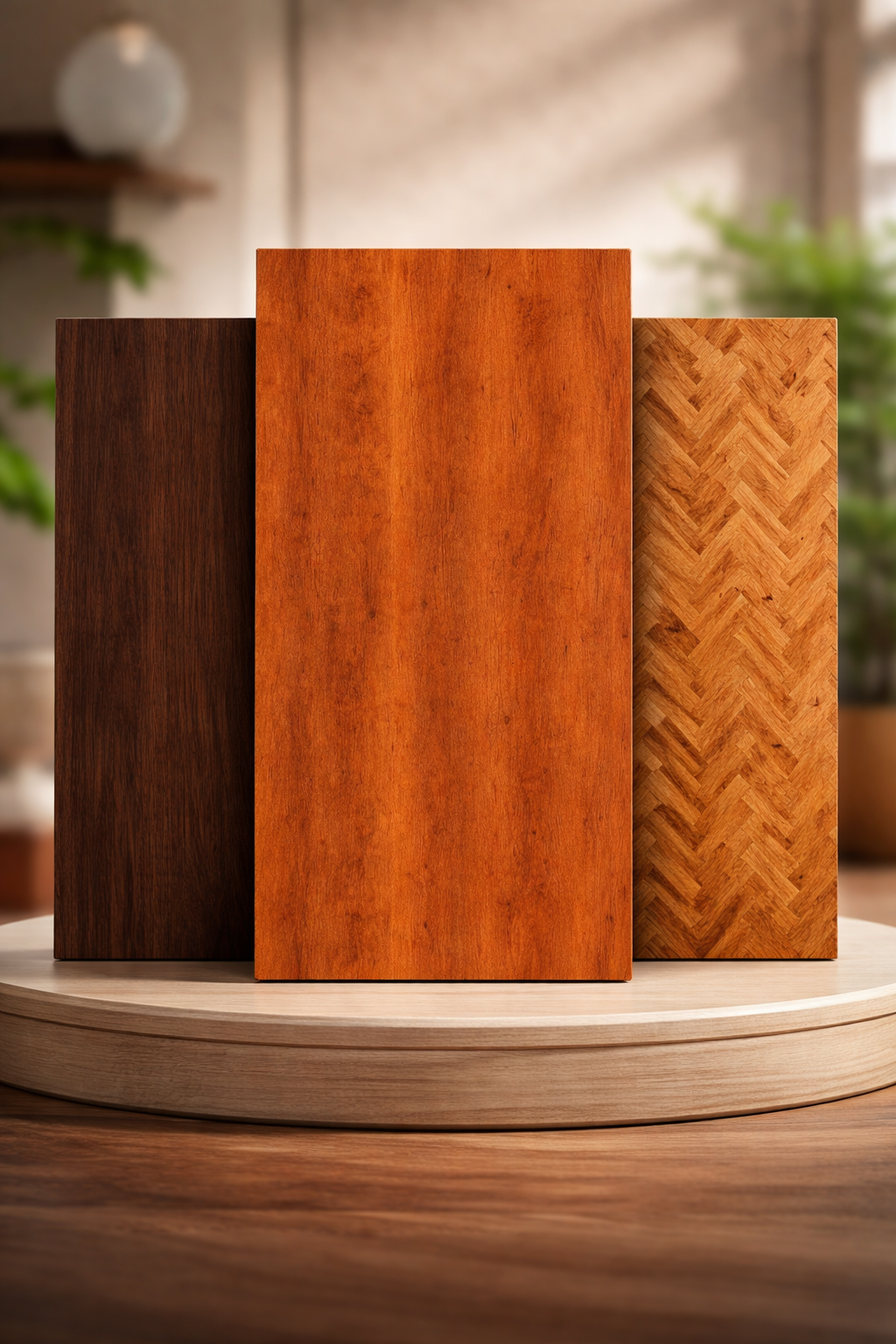
HPL cladding provides a broad palette of colors, textures, and patterns that can be reproduced consistently across large panels. Because the decorative layer is impregnated during manufacturing, the design is integral to the board and will not peel or delaminate under normal service conditions. This allows architects to achieve specific visual effects—such as wood grain, stone, metallic, or abstract motifs—without relying on separate finishes or coatings.
The material’s dimensional stability enables the creation of large‑format panels with tight tolerances, facilitating seamless installations in high‑visibility areas like atrium walls, airport terminals, or hospital corridors. HPL’s compatibility with various substrates—including metal studs, concrete, and timber—means it can be incorporated into diverse wall systems, rainscreens, or interior partitions with minimal detailing.
Cement board siding offers a more utilitarian appearance, typically presented as a flat, cement‑colored board that requires paint or texture coatings to achieve design variation. While it can be textured or shaped during manufacture, the range of factory‑finished aesthetics is generally more limited than that of HPL. Achieving complex patterns or custom colors often involves additional field‑applied treatments, which adds labor and potential variability.
In terms of specific applications, HPLMAKER’s panels are routinely specified for wall cladding in educational institutions, healthcare facilities, and transportation hubs where hygiene, durability, and low maintenance are critical. The product’s suitability for bathroom cubicles and false ceilings stems from its water resistance and ease of cleaning. Cement board is frequently used as a substrate for tile or stucco finishes, but when left exposed it demands a protective coating to match the performance characteristics that HPL provides inherently.
The ability to install HPL with minimal joint treatment and without the need for field‑applied sealants contributes to cleaner lines and faster project completion, attributes that are especially valuable in tight construction schedules or when working in occupied buildings where disruption must be minimized.
Talk to HPLMAKER
HPLMAKER is one of India’s leading high pressure laminate manufacturers, based in Indore and trusted by architects, builders, and homeowners across the country. Every sheet is backed by an industry-first up-to-25-year live camera warranty and complete local support. To get the right shade and the best price for your project, call +91 89824 90236 or write to marketing@hplmaker.com.